
Cracked Custard
Your baked custard or creme brulee has cracks across the surface and a grainy, curdled texture because the eggs overcooked. The proteins tightened too much, squeezed out water, and split the smooth surface.
Part of desserts cooking fixes and lumpy food fixes .
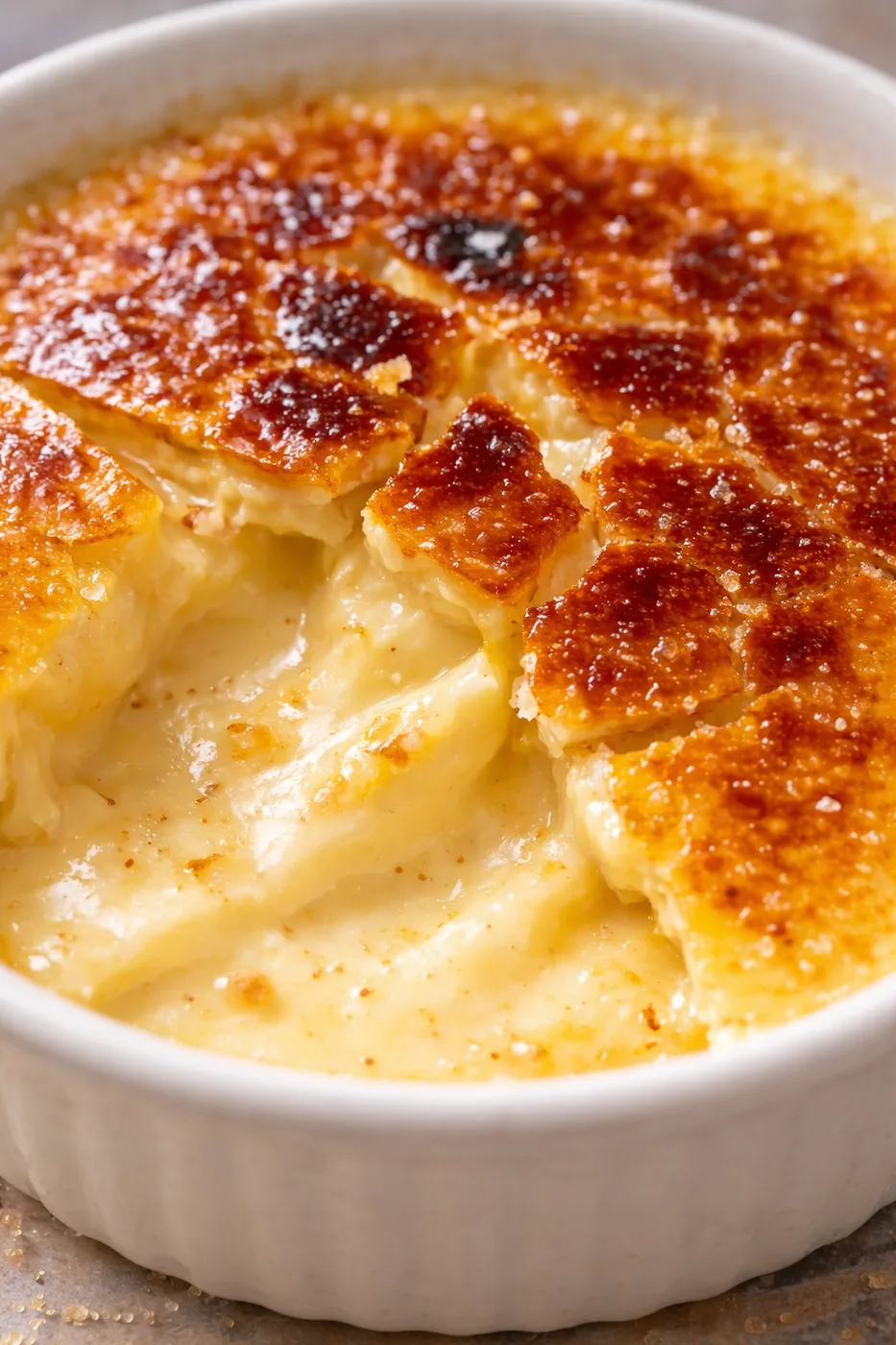
Ingredients on hand
- cracked baked custard
- 1/2 cup heavy cream
- 2 tablespoons powdered sugar
- 1/2 teaspoon vanilla extract
- fresh berries
Why it happened
Custard is a delicate gel of egg proteins suspended in liquid. Eggs set between 160-180F; above 185F the proteins overtighten, contract, and squeeze out water (syneresis), which creates both cracks and a grainy texture. This usually happens when the oven is too hot or the custard bakes too long without a water bath. The damage is structural and cannot be reversed, but the flavor is still good, so the fix is cosmetic.
The fix
- 1 whip 1/2 cup heavy cream with 2 tablespoons powdered sugar and 1/2 teaspoon vanilla to soft peaks
- 2 spread whipped cream over the custard to fill and hide the cracks
- 3 top with fresh berries and chill for 30 minutes before serving
If it's still wrong
- Blend the custard in a food processor until smooth, pour into glasses, and serve as a custard sauce (creme anglaise) over cake or fruit.
- Scoop the custard into ramekins, top with sugar, and torch for creme brulee; the caramelized sugar cap hides cracks completely.
Prevent next time
- Always bake custard in a water bath (bain-marie) with hot water reaching halfway up the ramekins.
- Bake at 325F and check 5 minutes early; custard should jiggle like gelatin in the center when done.
- Strain the custard mixture through a fine sieve before baking to remove air bubbles and chalazae.
Notes
Why this works
Egg custard is essentially a protein gel: egg proteins unfold and link together when heated, trapping liquid in a smooth, tender network. This network is stable only within a narrow temperature window (160-180F). Above that, the proteins over-crosslink and contract, expelling the water they were holding. The surface, being closest to the oven’s radiant heat, overcooks first and cracks as it shrinks. A water bath works by capping the temperature at 212F (boiling point of water) and providing gentle, even heat transfer. Since the damage is irreversible once proteins have over-set, the fix is purely about presentation: whipped cream fills crevices and adds fat that masks any slight graininess on the palate.
Substitutions
- heavy cream → coconut cream
- powdered sugar → granulated sugar (blend)
- vanilla extract → almond extract
- fresh berries → sliced fruit
More lumpy fixes
Other desserts fixes