
Home Seafood Fish Sticking to Pan
seafood 6 min fix
Fish Sticking to Pan
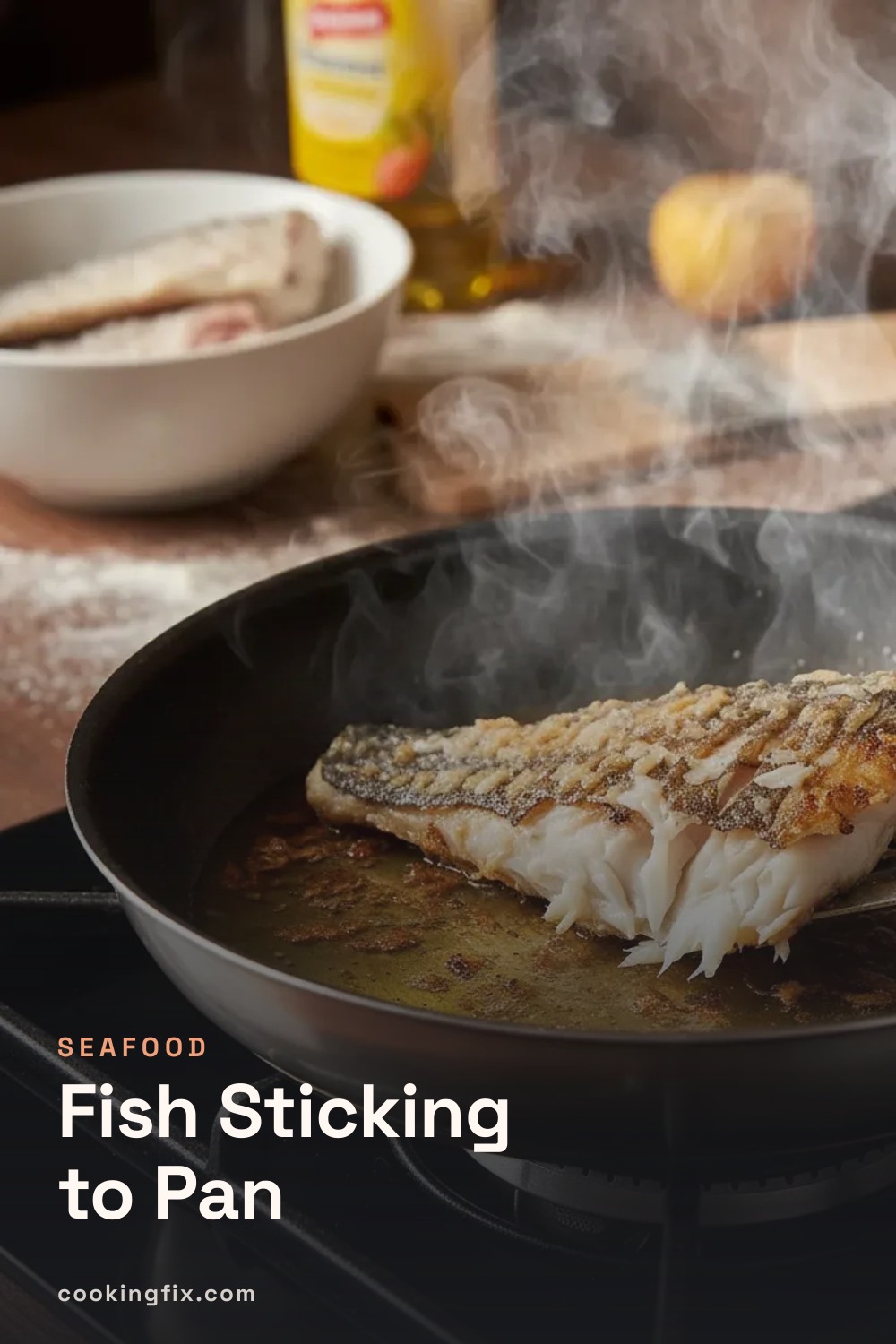
Your fish fillet is welded to the pan because the proteins bonded to the metal before a crust could form. Patience and proper heat release it cleanly.
skin stuck to pan · fillet tearing when flipped · gluten-free · dairy-free
The fix
Tap a step to check it off.
- 1 stop trying to move the fish and wait 1 to 2 more minutes; it will release when the crust forms
- 2 if truly stuck, add 1 tablespoon butter to the pan edge and tilt to run it under the fish
- 3 slide a thin metal spatula firmly along the pan surface in one smooth motion to release
If it's still wrong
- If the fillet is badly torn, flake it and use in fish cakes, pasta, or a grain bowl.
- Add 2 tablespoons water to the pan, cover, and steam for 1 minute to loosen the stuck portions.
Prevent next time
- Pat fish completely dry with paper towels and let it sit uncovered in the fridge for 30 minutes before cooking.
- Heat the pan over medium-high for 2 minutes, add oil, wait until it shimmers, then place fish skin-side down and do not move it for 3 to 4 minutes.
Notes
Why this works
When raw protein touches hot metal, the amino acids and sugars in the fish form temporary bonds with the metal oxide layer on the pan surface. These bonds are strong enough to tear the flesh if you force the fish up. However, as the Maillard reaction progresses at temperatures above 300 degrees F, the surface proteins transform into a rigid, browned crust that is no longer chemically bonded to the metal, and the fish releases on its own.
Surface moisture is the enemy because water absorbs enormous amounts of heat energy (the heat of vaporization) and keeps the surface temperature locked at 212 degrees F, well below the Maillard threshold. This is why drying the fish thoroughly is the single most important step. A shimmering-hot pan with adequate oil ensures the surface temperature stays high enough to brown quickly, forming the release crust before the interior overcooks.