
proteins 10 min
Duck Meat Dry
Overcooked duck breast turns dry and livery — slice it thin, rest it properly, and serve with a pan sauce to bring moisture back to every bite.
Part of proteins cooking fixes and dry food fixes .
dry duck meat overcooked duck breast tough duck texture gluten-free dairy-free high-protein
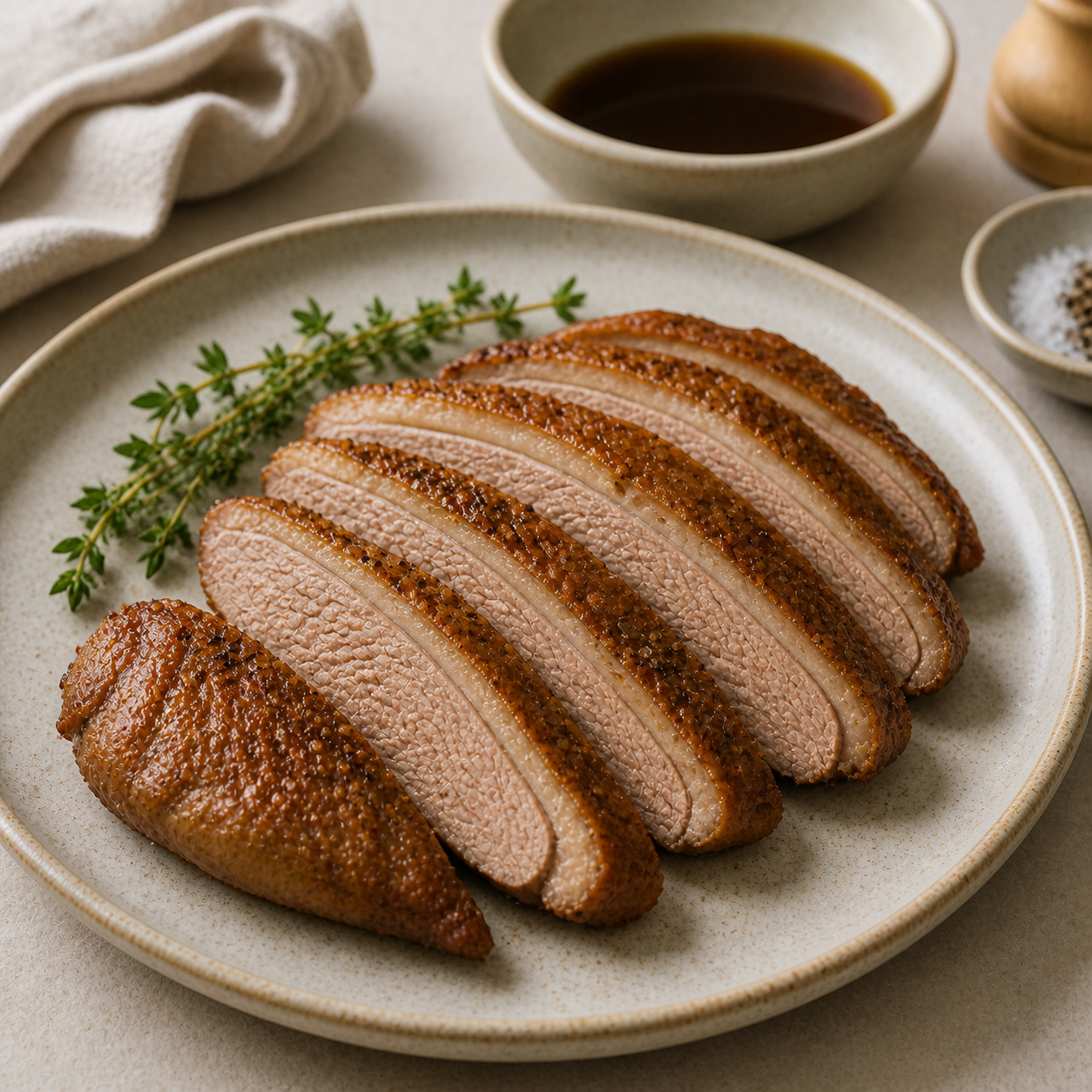
Ingredients on hand
- duck breast
- red wine or port
- butter
- shallot
Why it happened
Duck breast is lean muscle meat — unlike thighs, it has minimal collagen to retain moisture when overcooked. Above 145°F the proteins contract tightly, squeezing out juices. Thin slicing reduces the chewing resistance and a pan sauce replaces lost moisture at the table.
The fix
- 1 Remove duck from heat immediately and tent loosely with foil for at least 5 minutes before slicing
- 2 Slice as thin as possible on a diagonal against the grain to shorten the muscle fibers
- 3 Make a quick pan sauce by deglazing the hot pan with 3 tablespoons red wine or port, reducing by half, then swirling in 1 tablespoon cold butter
- 4 Fan slices over a warm plate and spoon pan sauce over just before serving
If it's still wrong
- Warm slices gently in a shallow pan with 2 tablespoons duck stock or chicken stock over very low heat — do not simmer, just warm through.
- Dice overcooked meat and fold into a hash with rendered duck fat, potatoes, and fresh herbs to redistribute moisture through the other ingredients.
Prevent next time
- Pull duck breast at 130°F internal for medium-rare — carryover will bring it to 135°F while resting.
- Rest duck for at least 5 minutes before slicing; cutting too early drains the juices onto the board instead of staying in the meat.
Substitutions
- red wine → orange juice for a lighter citrus pan sauce
- butter → duck fat for a richer, more cohesive sauce
More dry fixes
Other proteins fixes